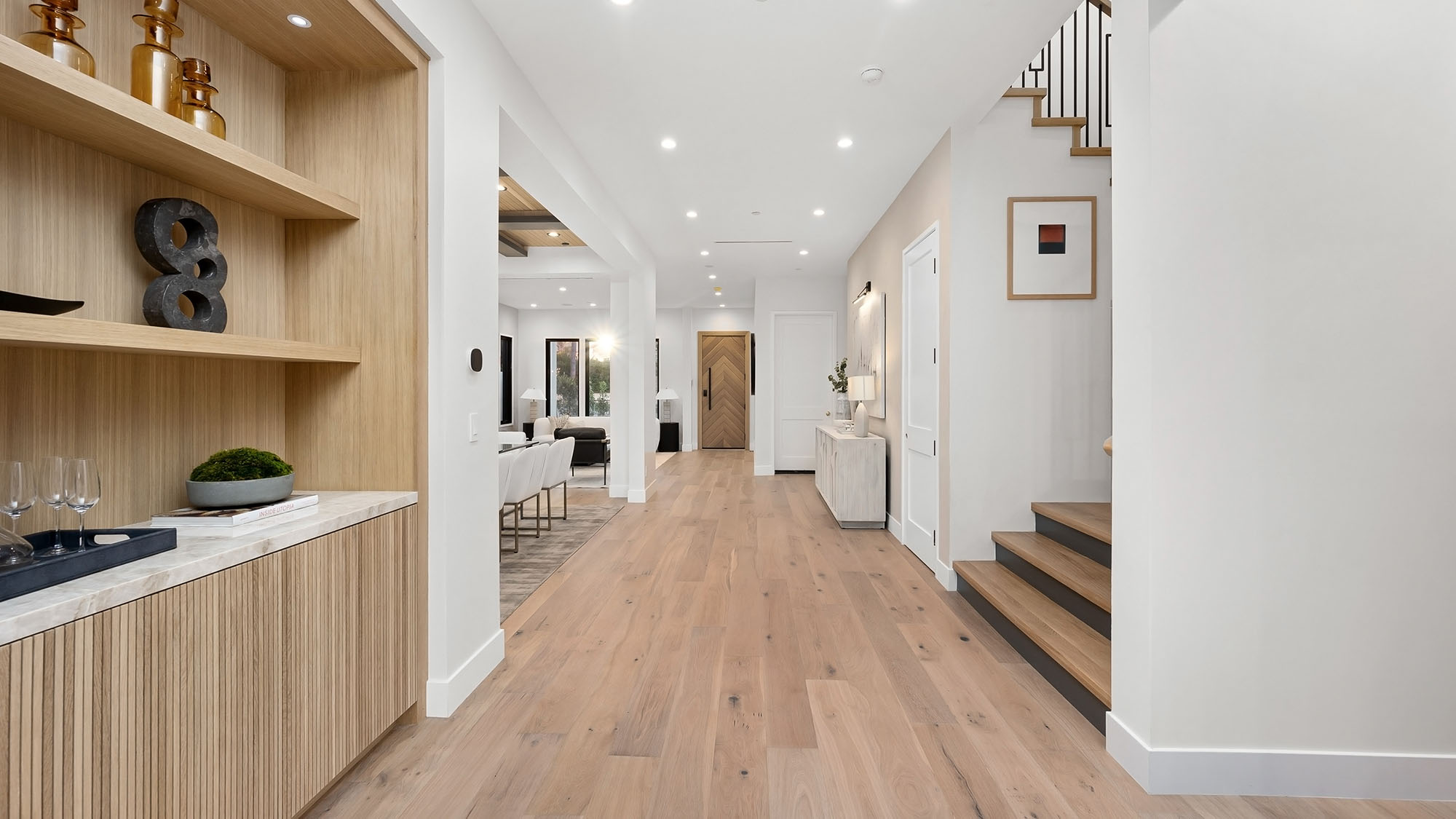
Choose Flooring for the Reality of Everyday Life
Flooring needs to do more than look attractive on installation day. It must work with the way a household moves through the home, the amount of sunlight a room receives, the frequency of cleaning, and the conditions the material will experience over time.
For Prescott homeowners, vinyl flooring offers a range of styles that can suit both contemporary interiors and more traditional homes. Wood-look planks can create a warm, familiar appearance, while stone-inspired designs provide another way to introduce texture and pattern. Depending on the product, vinyl can also offer practical features that make it worth considering for busy areas.
However, vinyl flooring is not a single product with identical performance across every collection. Sheet vinyl, luxury vinyl plank, and luxury vinyl tile differ in construction, installation requirements, and intended applications. Understanding those differences is essential when choosing a floor for an Arizona home.
Understand the Main Types of Vinyl Flooring
Vinyl flooring generally comes in several formats, each with its own characteristics.
Sheet vinyl is supplied in broad rolls and can provide a relatively continuous surface with fewer seams than a plank-based installation. It may be considered for certain kitchens, laundry rooms, and other areas where the selected product is approved for the conditions.
Luxury vinyl plank, often called LVP, is designed in plank shapes that commonly reproduce the appearance of wood. Luxury vinyl tile, or LVT, comes in tile-like formats and may feature stone-inspired patterns or other decorative designs.
The construction varies between products. Some have flexible structures, while others use more rigid cores. Wear layers, surface textures, attached underlayment, locking systems, and moisture-related claims can also differ.
These distinctions affect how the floor should be installed and maintained. Rather than selecting vinyl based on appearance alone, review the manufacturer's specifications and determine whether the product is suitable for the intended room.
Miele Flooring offers a starting point for exploring vinyl options and arranging a project estimate through its
free estimate page.
Look Beyond Gray: Warm Colors and Natural-Looking Finishes
One notable direction in current flooring design is a preference for warmer, more natural-looking colors and finishes. Honey oak, soft brown, warm beige, muted taupe, and natural stone-inspired tones can create a grounded appearance without making a room feel heavy.
For homeowners who want the look of wood without choosing a traditional wood floor, vinyl planks offer a variety of grain patterns and color variations. A light, natural finish may work well with white walls and contemporary furnishings, while medium brown tones can complement more traditional cabinetry and furniture.
Matte or lower-sheen finishes may also appeal to homeowners who prefer a less reflective appearance. The best finish depends on the product, the room's lighting, and the overall design.
When comparing samples, pay attention to undertones and pattern repetition. Some designs have prominent knots and contrasting grain, while others offer a quieter, more uniform appearance. The choice can influence how visually busy the finished floor feels across a large room.
Think Carefully About Arizona's Sunlight
Sunlight is an important consideration when selecting flooring for a home in Arizona. Rooms with large windows, sliding glass doors, or extended periods of direct sun can experience different conditions from shaded interior spaces.
Vinyl flooring products may have specific requirements or limitations concerning direct sunlight, surface temperatures, and temperature fluctuations. Performance depends on the particular product and installation system, so do not assume every vinyl floor will respond identically.
Before selecting a product, ask about its suitability for rooms with substantial sun exposure. Follow the manufacturer's recommendations for indoor temperature, acclimation where required, installation clearances, and any precautions relating to direct sunlight.
Window coverings may help manage intense sunlight in certain rooms, while maintaining the home's indoor conditions within the recommended range can support proper flooring performance. These considerations are especially important when planning a large, connected space with different exposure levels.
Choose Vinyl for the Room, Not Just the Look
The right flooring depends on what happens in each space. A family room may need a design that works with heavy furniture and regular foot traffic, while a laundry room may require closer attention to moisture-related specifications.
For kitchens, consider how the floor will handle daily movement, dropped crumbs, food spills, and cleaning. In entryways, think about dust, grit, and debris brought in from outside. In living rooms and bedrooms, appearance, comfort, furniture placement, and transitions to adjacent spaces may carry more weight.
Bathrooms and other moisture-prone rooms require especially careful product selection. Some vinyl flooring is designed for these applications, but the suitability of a product depends on its specifications and the conditions of the installation. A water-resistant surface does not automatically mean that the entire floor assembly is protected against every leak or moisture problem.
Check the manufacturer's guidance for the specific room, and ask about the recommended underlayment, subfloor preparation, and installation method.
Understand What Waterproof Claims Actually Mean
Waterproof and water-resistant descriptions are often used in flooring marketing, but it is important to understand what the claim applies to.
A product may be designed to resist water at the surface, while the complete installation can still be affected by water that travels beneath the flooring, reaches the perimeter, or remains trapped against the subfloor. The performance of seams, locking systems, adhesives, and other components varies by product.
For kitchens, bathrooms, and laundry areas, review the manufacturer's full installation requirements rather than relying on a single label. Confirm which types of moisture exposure are permitted and what steps must be taken if a spill or leak occurs.
Vinyl should also be installed over a suitable substrate. Existing moisture issues, unevenness, or damage beneath the old floor should be addressed before installation. A new surface cannot reliably compensate for an unresolved subfloor problem.
Compare Comfort and Sound Underfoot
Not every vinyl floor feels the same underfoot. Product thickness, core construction, underlayment, and subfloor conditions can all influence the feel of the finished installation.
Some homeowners prefer a rigid product because of its construction and installation method, while others may prefer the feel of a different vinyl format. Attached underlayment may be included in some products, but additional underlayment should not be added unless the manufacturer permits it.
Sound is another consideration, particularly in homes with open living spaces or rooms above other occupied areas. The flooring itself is only one part of the system, so ask how the recommended product and installation assembly may affect sound and comfort.
Samples are useful for evaluating color and texture, but they cannot fully reproduce how an installed floor will feel across an entire room. Reviewing the product specifications and installation requirements helps set realistic expectations.
Plan for Dust, Grit, and Everyday Cleaning
Prescott homes can experience dust and fine debris brought inside on footwear, clothing, and pets. These particles may accumulate along edges and in busy pathways, so routine cleaning is important regardless of the flooring material.
Follow the vinyl manufacturer's cleaning recommendations. In many cases, removing loose dirt with a suitable broom, vacuum, or dust mop and cleaning with an approved product will help maintain the surface. Avoid abrasive tools or harsh chemicals unless specifically permitted.
Entry mats can help collect debris before it spreads through the home, provided the mats are compatible with the floor and placed securely. Furniture pads may help reduce scratches caused by movement, while protective measures should be used when moving heavy appliances or furnishings.
Even durable flooring benefits from care. Cleaning promptly after spills, using suitable products, and avoiding practices that could damage the surface can help preserve its appearance.
Make Open-Plan Spaces Feel Connected
Many homeowners want the kitchen, dining area, and living room to feel like parts of one cohesive space. Using the same vinyl flooring across connected areas can help create visual continuity, particularly when the rooms share similar lighting and design elements.
Longer plank patterns may emphasize the length of a room, while a natural wood look can provide a consistent backdrop for different furniture styles. The effect depends on the product's color, pattern variation, plank dimensions, and the arrangement of adjoining spaces.
Transitions still need attention. Doorways, stairs, changes in floor height, and connections to tile or other materials may require specific transition pieces. The installation layout should be planned around these details rather than decided after the flooring has been laid.
If the project includes several rooms, consider selecting the flooring and transition materials together. This helps the finished installation feel deliberate rather than pieced together.
Don't Overlook Subfloor Preparation
The quality of the installation has a major influence on how vinyl flooring performs. Before work begins, the existing floor and substrate should be assessed for suitability, including flatness, cleanliness, moisture conditions, and any damage that needs attention.
Different vinyl products have different requirements. Some may be installed using a floating system, while others require adhesive or another method. Underlayment and vapor-control requirements also depend on the product and subfloor.
Skipping preparation can contribute to visible imperfections, movement, joint problems, or other installation issues. Existing flooring should not be covered without confirming that the new product is approved for that application.
Before committing to a particular floor, ask what preparation may be required and how the condition of the existing surface could affect the project.
Compare the Total Project, Not Just the Material
The final cost of new flooring can include material, removal and disposal of existing flooring, subfloor preparation, underlayment, installation, transitions, and trim. Room dimensions and layout complexity can also affect the amount of work involved.
When comparing products, consider their intended application, maintenance requirements, and expected conditions alongside their initial price. A floor should be appropriate for the room and the household's needs, not simply the most attractive option on a sample board.
It is also worth asking about future repairs and product availability. Keeping the product name, specifications, and installation information can be useful if a board or section ever needs attention.
Explore Vinyl Flooring for Your Prescott Home
Vinyl flooring offers a broad range of colors, formats, and designs, but choosing the right option requires more than finding a wood or stone pattern you like. Room usage, sunlight exposure, moisture conditions, cleaning habits, and subfloor preparation should all be part of the decision.
By comparing product specifications and planning the installation carefully, homeowners can identify a floor that fits both their design preferences and the practical demands of everyday living.
To discuss vinyl flooring options and arrange an estimate, visit Miele Flooring's
free estimate page. For general questions about a flooring project, use the
contact page to get started.